
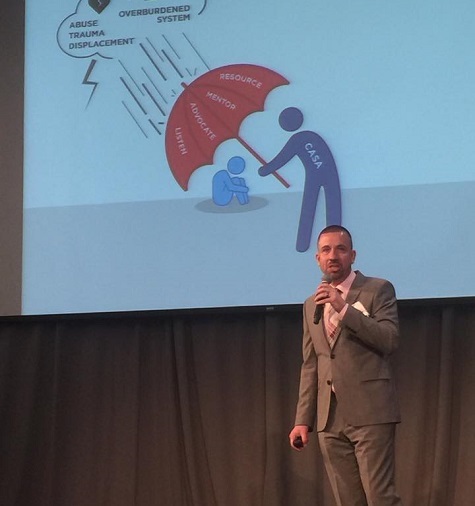
Meet the Director
Charles Lerner brings over 20 years of experience in child welfare and mental health. He is the founding Executive Director of Boston CASA. During his seven-year tenure, Boston CASA increased revenue from $60,000 to over $800,000, volunteers from 33 to 175, and children with advocates from 60 to 225. His previous work has included leading the first LGBTQ foster-to-permanency program in California as well as teaching at multiple universities including California State University- East Bay and Harvard University. He holds a master’s degree in marriage and family therapy.
Charles is a previous foster youth and an adoptive father. His son had a CASA and she’s still in their lives close to a decade later. He joins Massachusetts CASA in the hopes to elevate the CASA network across the Commonwealth and support local programs across the state to reach their goals. Charles believes that foster care, as we know it, does not work for children, their families, or society. As a matter of fact, the system is harmful and unjust. He plans to leverage his role as State Director to be a catalyst for change, including bringing greater dignity and humanity to the system. Stay tuned for regular communications from Charles. He welcomes messages at charles@macasa.org.
The Politics of Harmony Montgomery: How the System Failed in Two States
It’s always daunting for me to be in the media. What words can you offer in response to the loss of a child?
Alison King and I discussed the political spin that would no doubt come out of the recent developments in Harmony’s case. I shared with her that the spin would eventually stop and we’d have the same system with the same problems with the same results. I shared that we need to get bold and create a system that dramatically reduces the number of children in foster care. Only then will we be able to meet our obligation for those children that need to be in care.
Lastly, no child should be entangled in this system alone. Children need at least one person solely looking after them and ensuring that their needs are met, they have some sense of normalcy, and they are not slipping through the unavoidable cracks of the system. It’s why I believe in the CASA model so passionately. As is the case for every program, CASA needs to grow and evolve. However, I’ve never seen a program that has more of a positive impact on the lives of children in foster care. As a previous foster youth and the adoptive father of a child from foster care who had a CASA, I’m proud to be an ambassador of this organization.
Read the news story: The Politics of Harmony Montgomery: How the System Failed in Two States